Initial Teaching Licensure Programs
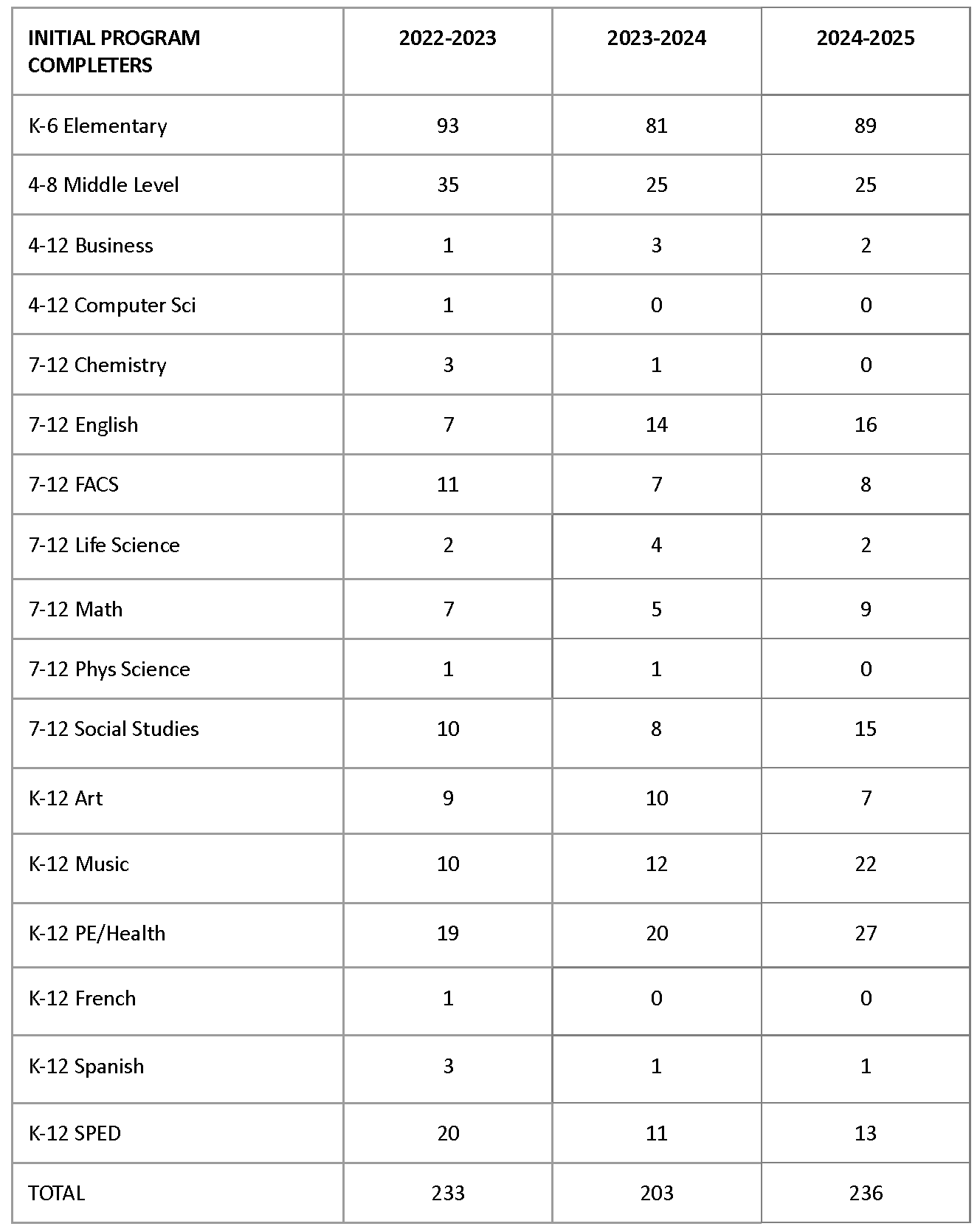
The EPP requested completer impact data from the Arkansas Department of Education in Fall 2025 and received three years of ATLAS classroom-level data for program completers in their first year of teaching. These data were reviewed with faculty during the annual Data Day event. The most recent results presented in this report reflect AY 2024–2025 ATLAS data linked to AY 2023–2024 EPP completers.
Based on those data and resultant discussions, this report analyzes the impact of University of Central Arkansas (UCA) teacher preparation program completers on K–12 student achievement using ATLAS assessment data from their first year of teaching. The analysis examines three cohorts and reports the percentage of students in completers’ classrooms scoring at the Limited, Basic, Proficient, and Advanced levels in Math, Reading/ELA, and Science, comparing these distributions to statewide benchmarks to identify potential patterns of program strength and concern across certification areas (e.g., Elementary, Middle Level, Secondary, MAT, and SPED). Interpretation of these data is limited by the absence of key contextual variables (e.g., school demographics, prior student achievement, and placement contexts) within the state dataset.
The most recent cohort of 68 completers, representing AY 2023–2024 graduates in their first year of teaching (AY 2024–2025), shows aggregate proficiency distributions that align more closely with state benchmarks than previous cohorts, with 33% of students scoring Limited in Math, 21% in Reading/ELA, and 27% in Science. However, disaggregated results reveal substantial variation across programs. Elementary completers demonstrate the most favorable outcomes, with 41–45% of students reaching Proficient or Advanced across subjects, consistent with patterns observed in earlier cohorts. In contrast, several areas warrant further investigation, most notably 7–12 Secondary Math, where 89% of students taught by completers scored in the Limited category—well above the state average—and Middle Level Reading/ELA, where the majority of students scored Basic with relatively few reaching proficiency. Because these data became available after the most recent Data Day event, faculty have not yet engaged in formal analysis or contextualization. As a result, key interpretive questions remain regarding completer placement contexts, course assignments, student prior achievement levels, and program-specific preparation factors, which will be addressed in future faculty data review discussions.
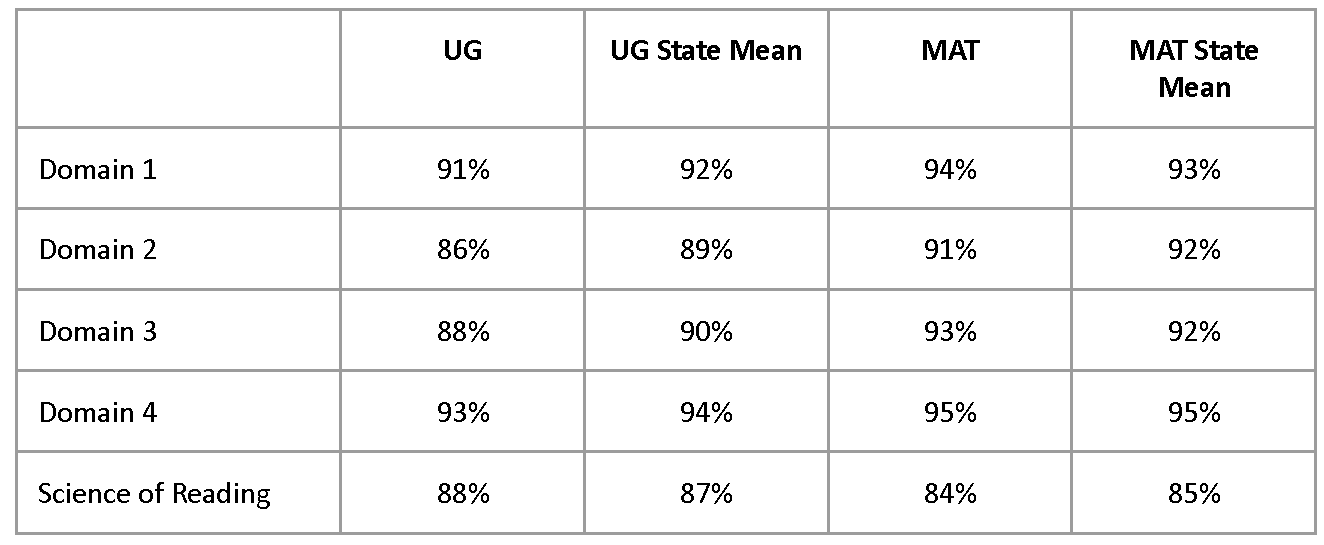
The state provides aggregate employer data for each EPP – report linked here. State data show that 90% of employers believe UCA undergraduate program completers are well-prepared (agree, strongly agree) for their roles as classroom teachers. Similarly, 94% of employers feel that UCA MAT program completers are well-prepared for the classroom. The EPP also administers an independent employer survey to corroborate the state findings, with results that closely align with the state-reported perceptions of completer preparedness. Both the state data and the EPP’s internal employer survey results will be presented as complementary evidence during the October 2027 site review. Employer data indicating % of completers considered well prepared for each domain as reported below. Supervisors were asked “was [candidate name] from [EPP] prepared to [insert TESS component language]?” Data were then reported for each component and aggregated to the domain level.
- Strong overall employer confidence. Employer survey data indicate that 90% of employers view UCA undergraduate completers and 94% of MAT completers as well prepared for classroom teaching, reflecting consistently high perceptions of preparation across both pathways.
- Performance generally aligns with state benchmarks. Across Domains 1–4, UCA completers perform close to state means, with MAT completers meeting or slightly exceeding state averages in several domains, suggesting that program preparation is comparable to or stronger than statewide patterns.
- Relative strengths in professional practice domains. The highest ratings appear in Domain 4 (93% UG; 95% MAT), indicating strong employer confidence in areas typically associated with professional responsibilities, collaboration, and broader teaching practices.
- Opportunities for targeted improvement. Slightly lower ratings in Domain 2 for both UG and MAT programs suggest potential areas for program refinement, while Science of Reading preparation is rated slightly above the state mean for undergraduates but slightly below for MAT completers, warranting continued attention as SoR expectations evolve.
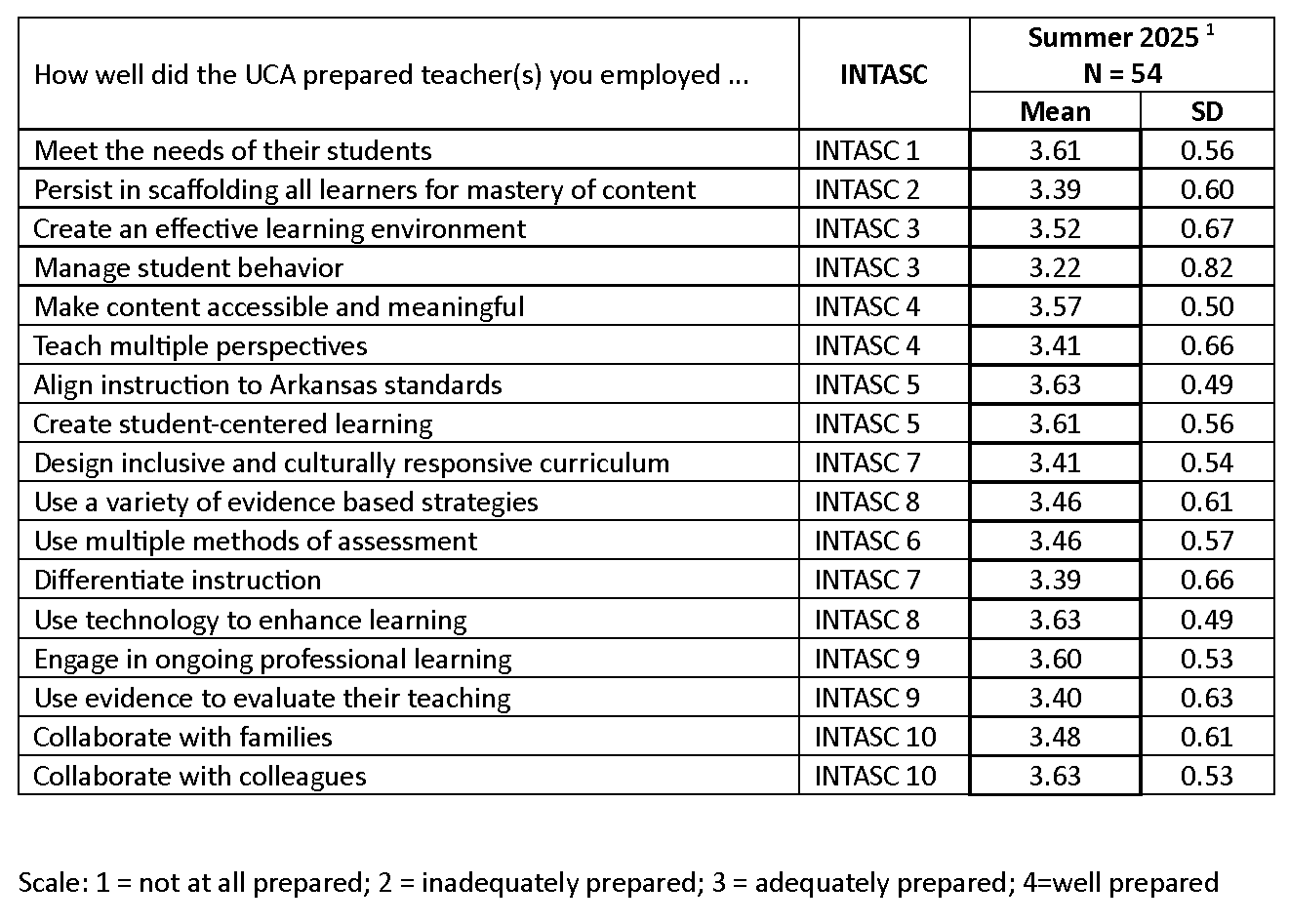
The Initial Programs Employer Survey is an internal measure used by the EPP to assess employer perceptions of the preparedness and effectiveness of UCA program completers during their first year of teaching. The survey is administered annually to school administrators who supervise recent completers and asks them to rate preparation across competencies aligned with the InTASC standards using a four-point scale ranging from “not at all prepared” to “well prepared.” This report summarizes the three most recent administrations (Summer 2023–Summer 2025), with results disaggregated by program. Employers consistently rate UCA completers between “adequately prepared” and “well prepared” across most domains, with particularly strong ratings in areas such as meeting student needs, aligning instruction to Arkansas standards, collaborating with colleagues, and integrating technology into instruction. Employers also indicate that completers are generally prepared to support diverse student populations, including students of color, students in poverty, and students with special needs, though slightly lower ratings appear in areas such as classroom management and supporting English Language Learners. These findings provide additional evidence of completer effectiveness and are used by the EPP to triangulate state employer survey results and inform program improvement efforts. Benchmark comparison data are not available because the state does not collect or report comparable employer survey indicators across educator preparation programs beyond those included in Measure 1b.
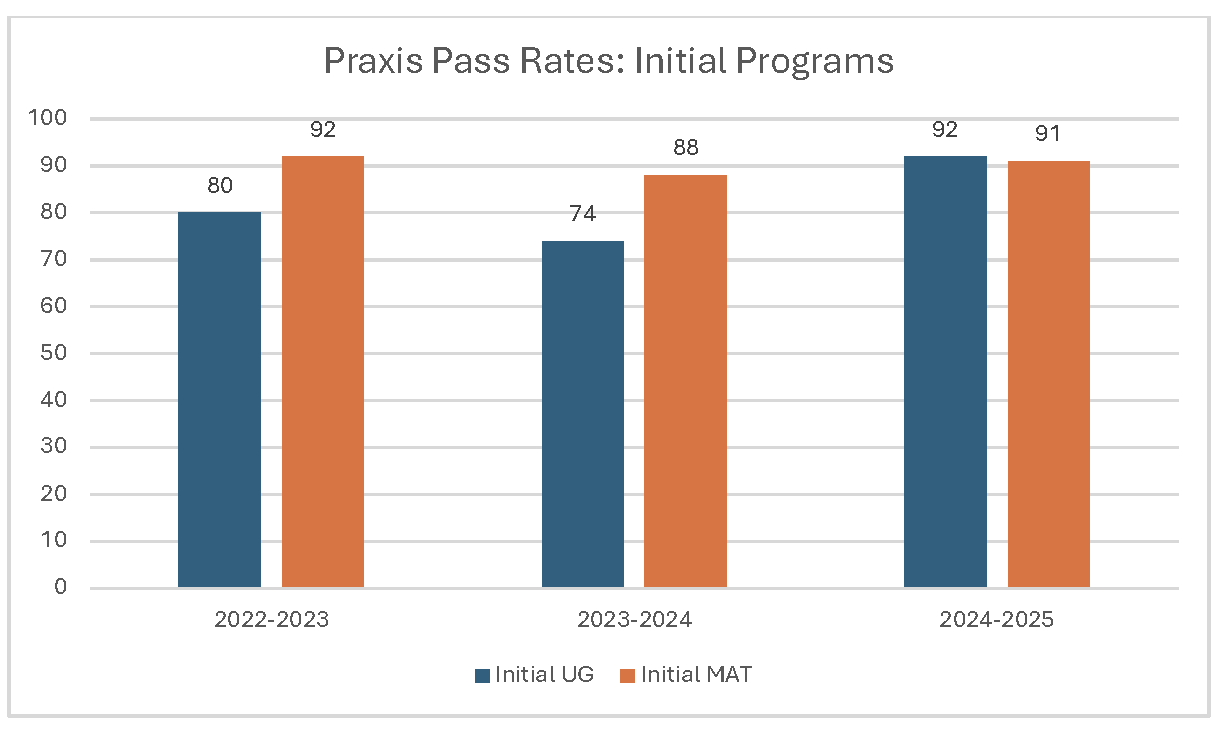
- Candidate pass rate on required content Praxis exams is tracked across programs by the Office of Candidate Services (OCS). Disaggregated program data are tracked for pass rates, mean score, standard deviation, and range
- Both initial and advanced programs report overall success in candidate ability to pass the required Praxis content exam(s) with many programs yielding pass rates at 90% and higher. For initial programs, changes to policy for “Gate 3” (admission to internship 2) have resulted in higher pass rates, notably for the K6 program. Candidates must now meet the ADE/AAP score for admission to Gate 3 (https://uca.edu/ocs/aap-provisional/). Additionally, the EPP has created several support and remediation structures for students struggling to pass their required exam(s) successfully, including: 240 Tutoring, Praxis Boot Camps (DESE grant), and state resources/tutoring programs. Undergraduate K6 Social Studies continues to be an area of focus for continuous improvement.
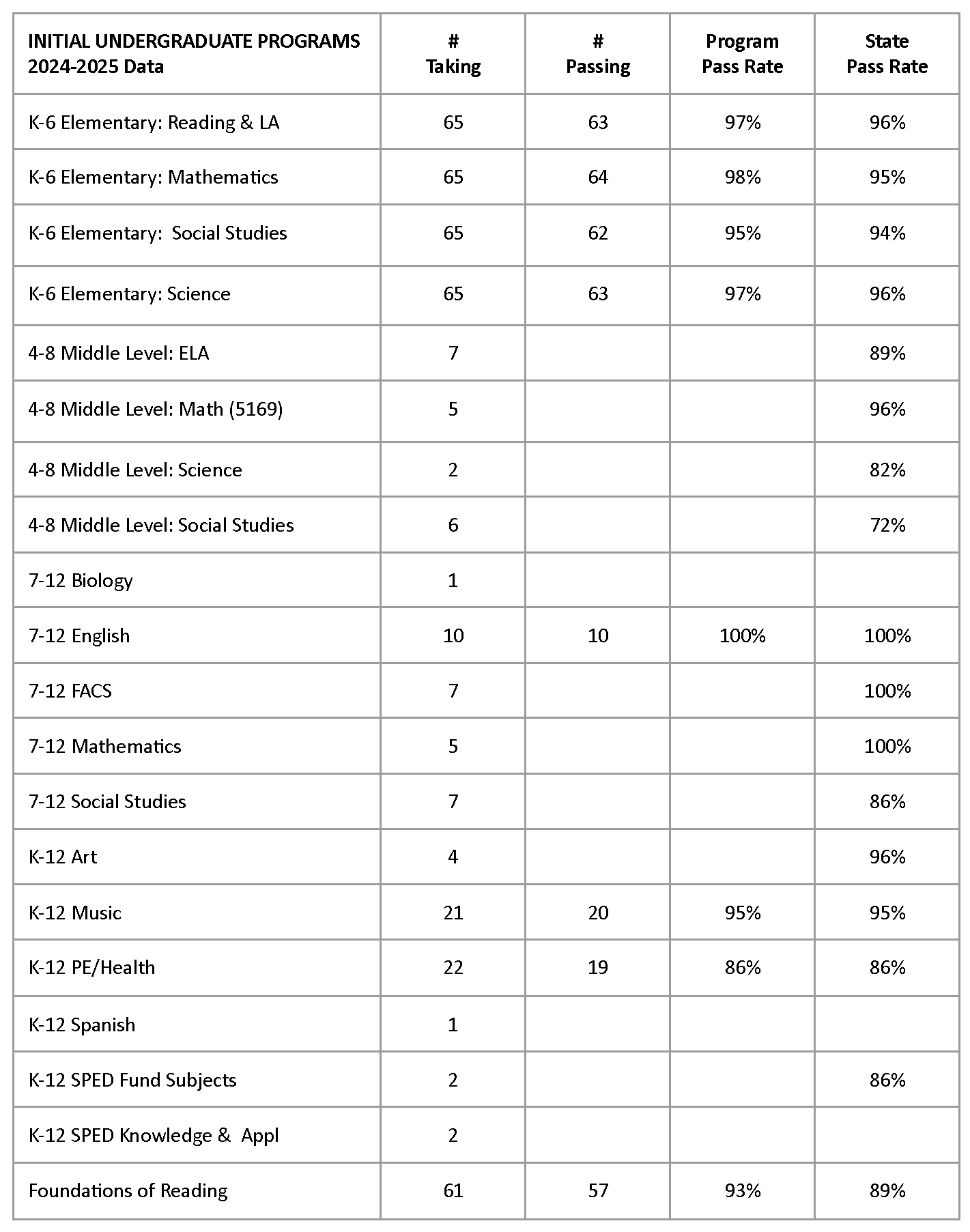
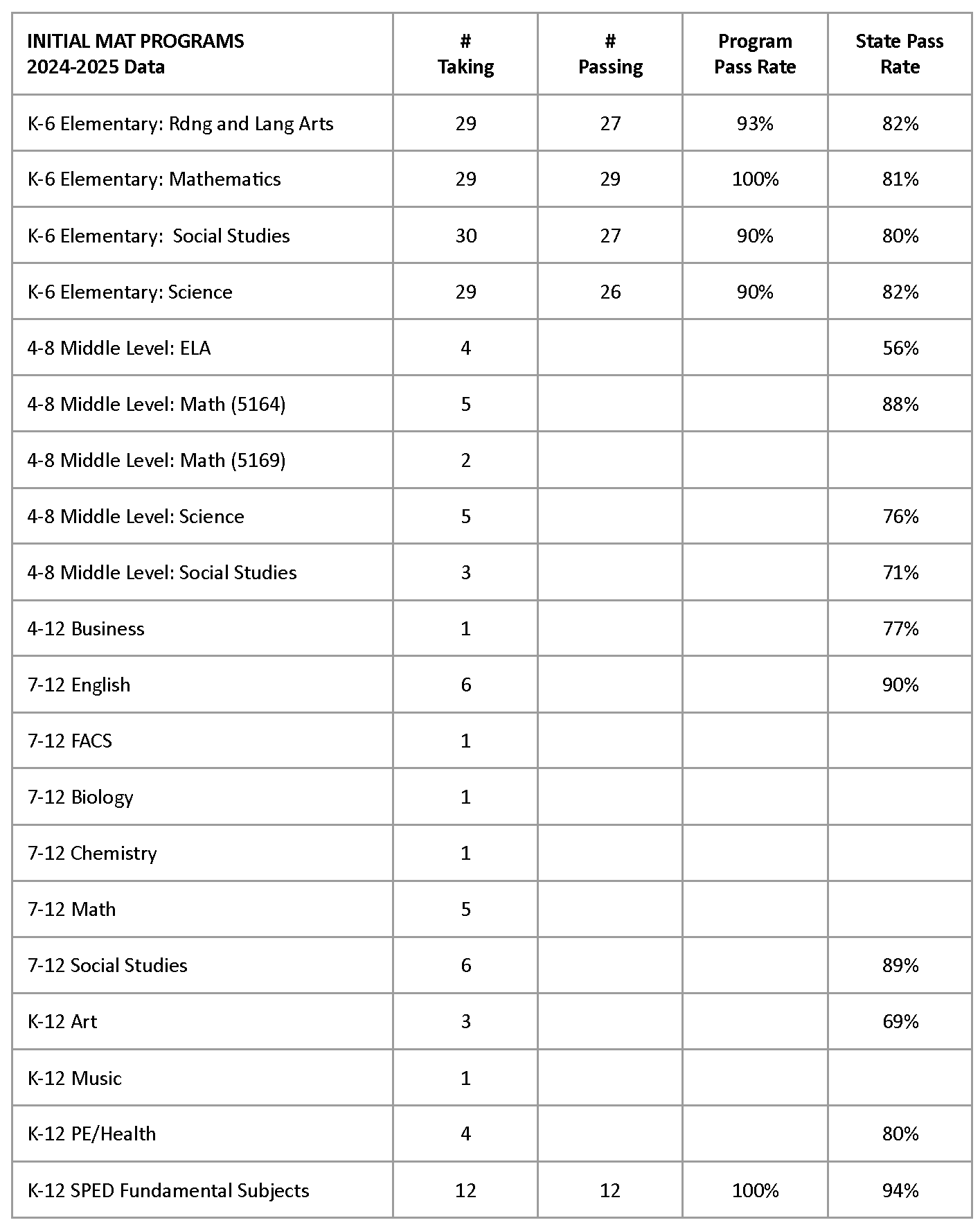

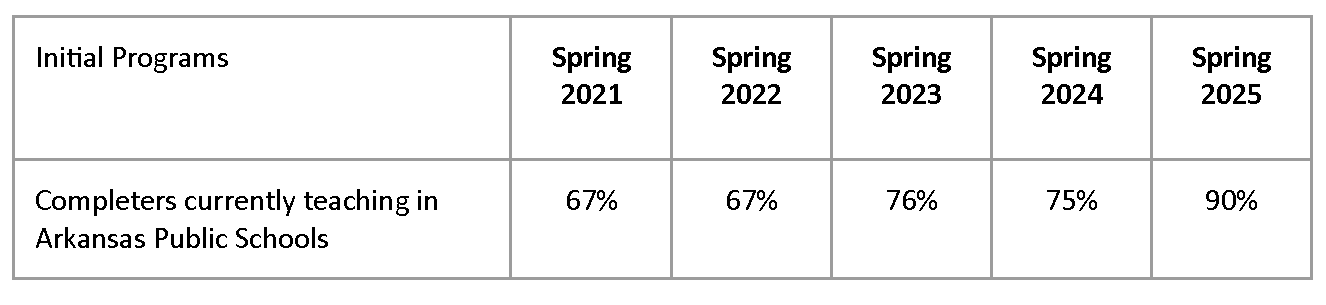
EPP gathers data on initial program completers’ employment and retention milestones in partnership with UCA Office of Institutional Research and in partnership with Arkansas Division of Elementary and Secondary Education. Each reporting point (e.g., Spring 2025) reflects those completers teaching in APS at that point in time based on their completion the prior academic year. For example, the Spring 2026 data point reflects those AY 24-25 completers teaching in APS in AY 25-26. Notably, the data show an increase in the number of completers obtaining employment in Arkansas Public Schools. This may be attributed to the state mandated increase in starting teacher salary statewide.
Advanced Programs
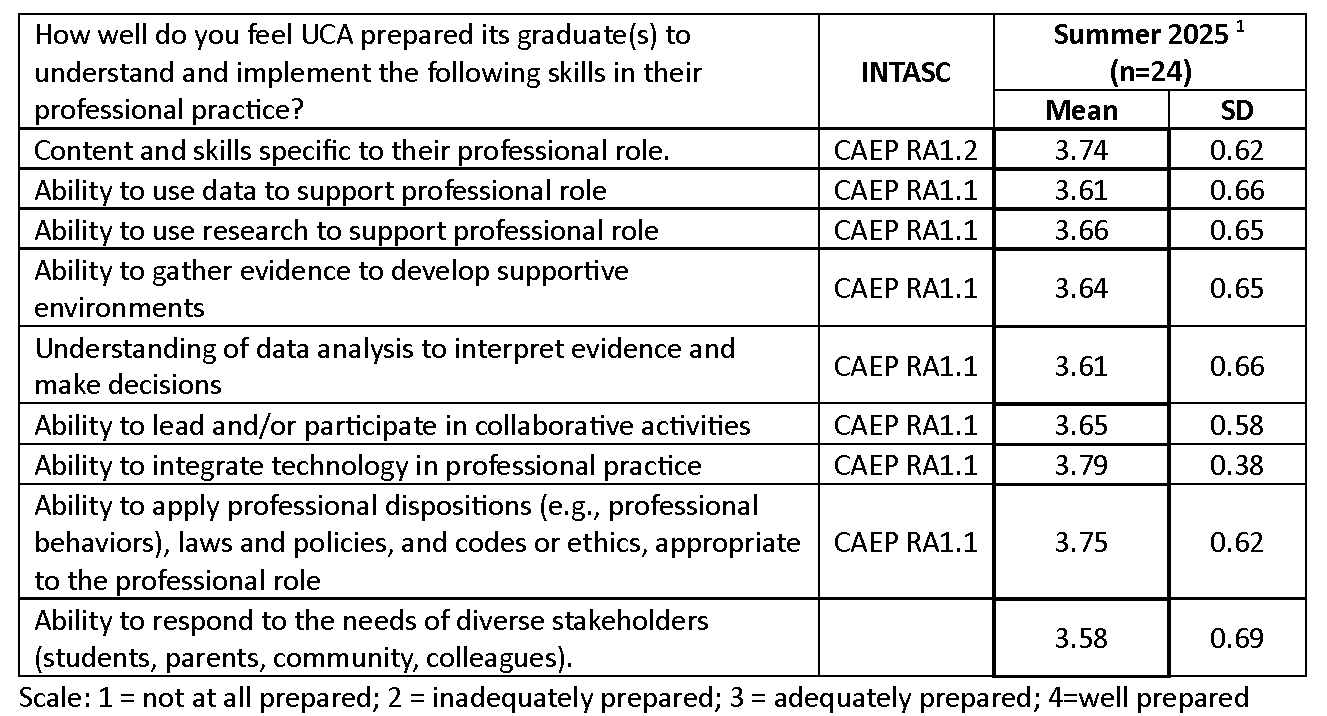
The Advanced Programs Employer Satisfaction Survey is an internal measure used by the EPP to assess employer perceptions of the preparedness and effectiveness of graduates from advanced licensure programs. The survey is administered annually to supervisors of graduates and asks them to rate preparation across competencies aligned with CAEP RA1 expectations using a four-point scale ranging from “not at all prepared” to “well prepared.” This report summarizes the three most recent administrations (Summer 2023–Summer 2025), with results disaggregated by advanced program area. Across these administrations, employers consistently rate UCA graduates between “adequately prepared” and “well prepared,” with particularly strong ratings in areas such as role-specific professional knowledge, the integration of technology in professional practice, and the application of professional dispositions and ethical standards. Employers also report that graduates demonstrate strong capacity to use data, research, and evidence to inform decision-making and to collaborate with colleagues and stakeholders in their professional roles. These findings provide additional evidence of advanced program effectiveness and are used by the EPP to inform program improvement and continuous improvement efforts. Benchmark comparison data are not available because the state does not collect or report comparable employer survey indicators across educator preparation programs.
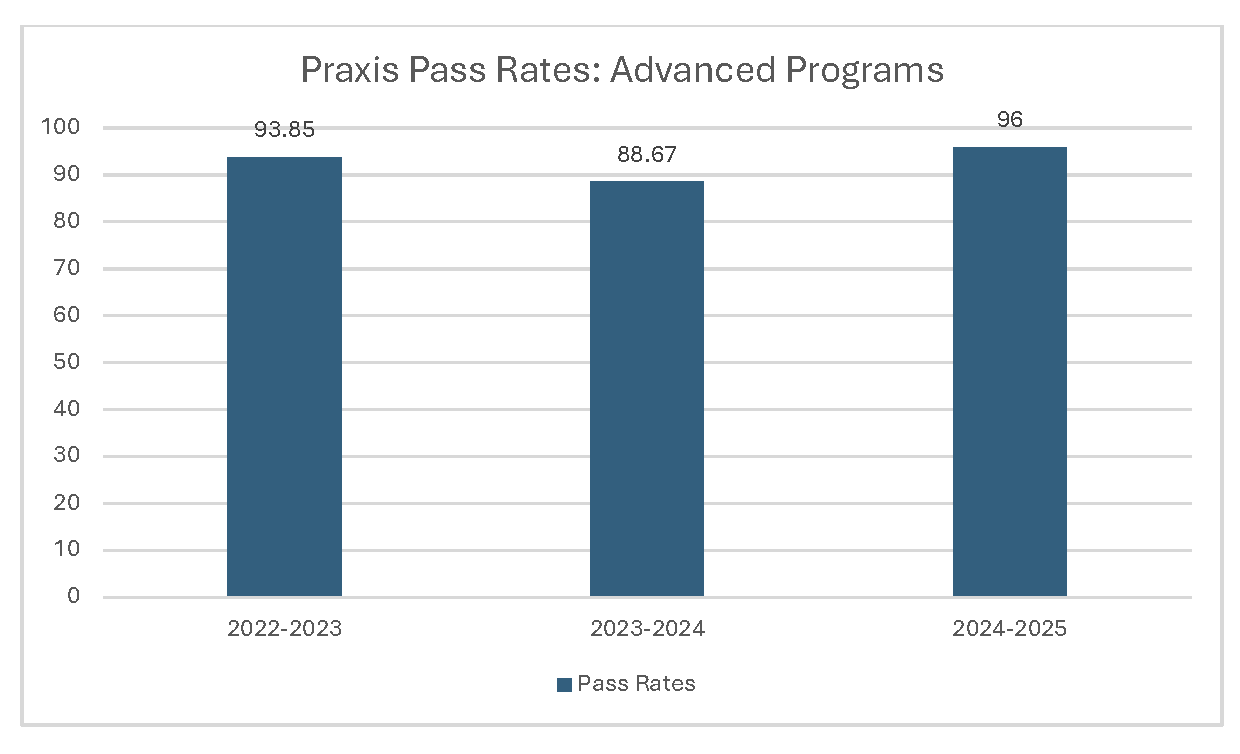
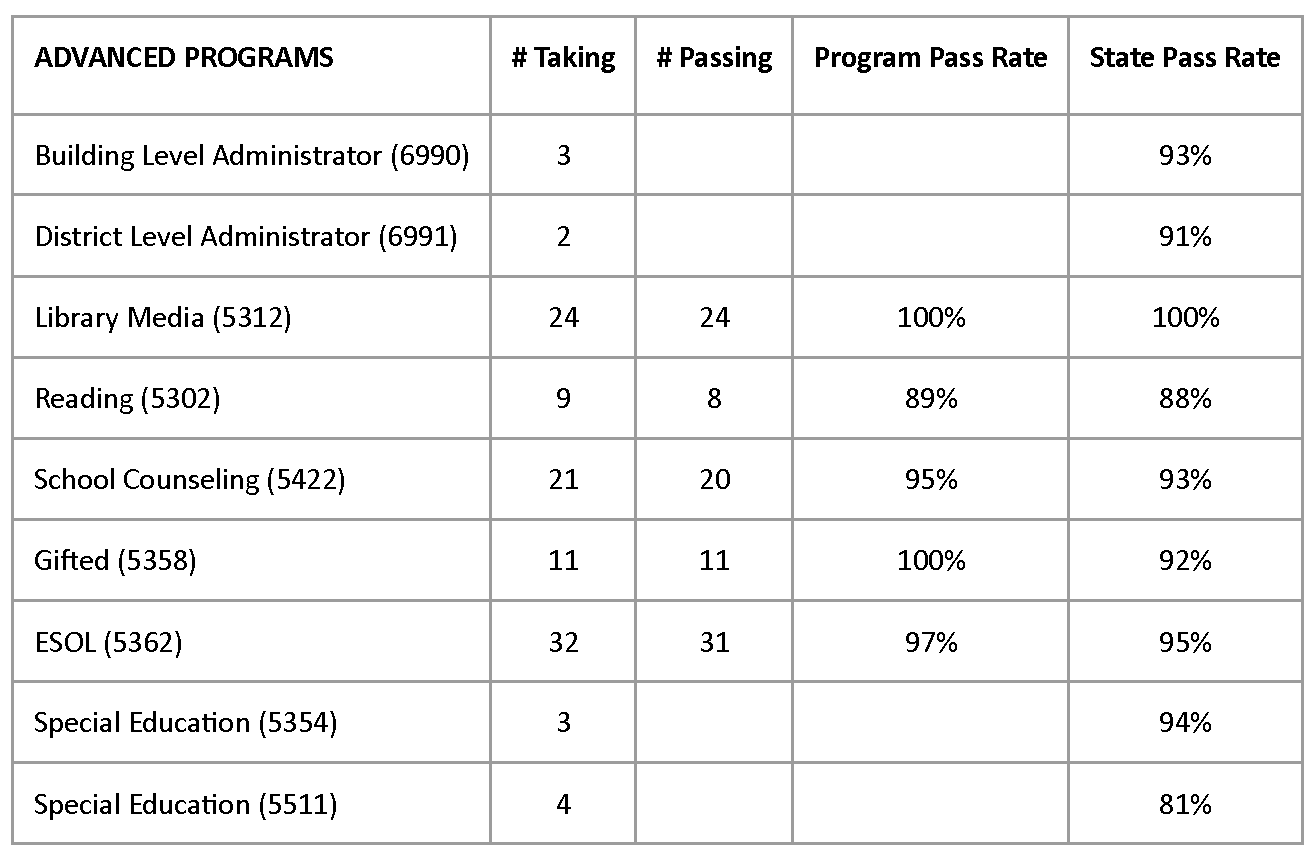
- Candidate pass rate on required content Praxis exams is tracked across programs by the Office of Candidate Services (OCS). Disaggregated program data are tracked for pass rates, mean score, standard deviation, and range
- Both initial and advanced programs report overall success in candidate ability to pass the required Praxis content exam(s) with many programs yielding pass rates at 90% and higher. The EPP has created several support and remediation structures for students struggling to pass their required exam(s) successfully, namely 240 Tutoring.
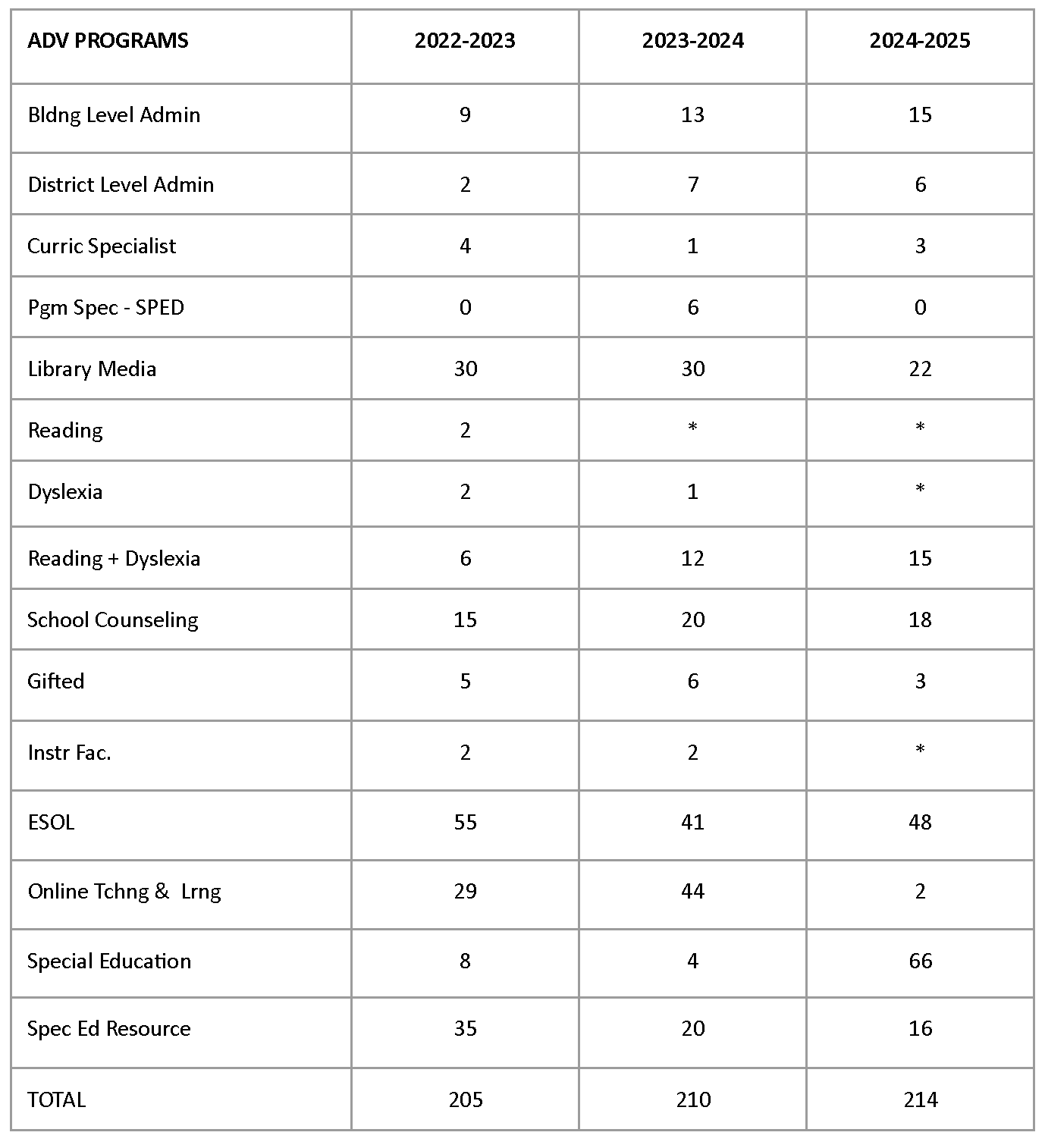
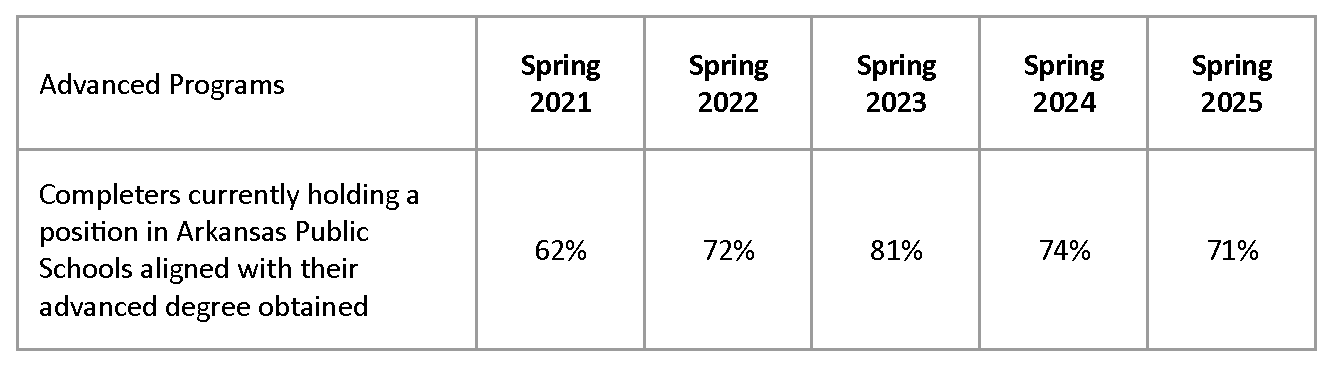
EPP gathers data on initial program completers’ employment and retention milestones in partnership with UCA Office of Institutional Research and in partnership with Arkansas Division of Elementary and Secondary Education. The EPP asks at end of program if each graduating advanced program candidate has acquired a new position aligned with their graduate program of study and/or is now working in a position aligned with their graduate program of study. Each reporting point (e.g., Spring 2025) reflects those completers teaching in APS in a position aligned with their area of licensure as they exit their program. For example, the Spring 2025 data point reflects those AY 24-25 completers working in a position aligned with their advanced program in APS in AY 24-25.
CAEP Report Archive
CAEP Annual Report (Spring 2025)
CAEP Annual Report (Spring 2024)
CAEP Annual Report (Spring 2023)
CAEP Annual Report (Spring 2021)
CAEP Annual Report (Spring 2020)
CAEP Annual Report (Spring 2019)
CAEP Annual Report (Spring 2018)
NCATE Accreditation Review (Fall 2011)