Drifting Across Cultures: What Sets Japanese and American Drifters Apart
Drifting isn’t just a hobby for me—it’s an outlet for me to express my engineering curiosity, make and connect with friends, and feed my competitive spirit. For the past four years, I’ve immersed myself in this discipline: learning, growing, and competing. One thing I’ve consistently heard is that there is a noticeable difference in how Japanese and American drifters drive. To understand what truly sets Japanese drifting apart, I decided to experience it firsthand.
Since drifting originated in Japan, it’s no surprise that it remains one of the country’s most prominent motorsports. Japan is home to numerous purpose-built tracks that are both challenging and meticulously maintained. These tracks are also home to some of the best drifters in the world—Daigo Saito, Naoki Nakamura, and Dai Yoshihara, to name a few.
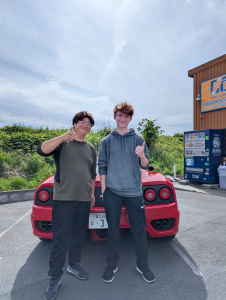
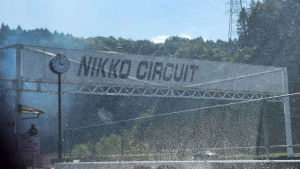
During my journey through Japan, I visited several legendary tracks: Meihan Sportsland, known for its wide and fast entry; Mikawa Motorland, famous for large tandem groups and dramatic photo ops; and Nikko Circuit, a high-speed track with big entries and a long straightaway at the end. At each of these tracks, I met a variety of drivers, some spoke English but most knew none at all. Still, with the help of translators and asking lots of questions, I was able to get a feel on what is different and what is the same.
Before diving into specific contrasts, I want to highlight the core idea that sets Japanese drivers apart: an aggressive driving style. That’s not to say American drifters aren’t aggressive—many are—but in Japan, aggression is foundational. It’s deeply ingrained in the culture and approach to drifting. In the U.S., driving aggressively is often something adopted later, usually as a way to emulate Japanese techniques or increase speed. American drifting tends to showcase more stylistic diversity and allows for slower-paced driving, partially due to differing access and goals.
One of the biggest differences I noticed is how often people in Japan can drift. They have tracks scattered across the country, and events happen very often. Many people can go drifting multiple times a week. This ease of access means that they can go practice very often and compared to the United States where I can go drifting maybe once every 3-4 months at my local event, which is hosted at an airport as opposed to a nice circuit, every other day seems like a blessing. So Japanese drivers naturally get more practice, which means they are more consistent and dialed-in.
Another big difference is that Japanese cars typically have less horsepower than drift cars in the United States. This may seem like a disadvantage, but what it really does is force Japanese drivers to treat drifting as a style of grip racing. With less power, it’s harder to drift by just flooring it, so they drive with more grip and more commitment. They keep up their speed and fight the car to keep it sliding. American drift cars are usually built to make the driver comfortable, which is fine, but this usually means the car has more than enough power to lose rear grip consistently and rely on the car more than your own skill. I’m guilty of this too—my car has more power than I need but I have been practicing techniques to better utilize that power recently.
The handbrake is another area where I really noticed a difference. In America, I hear a lot about either learning to drift using the handbrake as a way to get started because it’s easy, or to stay away from the handbrake because it does not encourage aggressive drifting. Both takes are valid but in my experience in Japan, the use of a handbrake did not seem debated. I think it was more seen as a stylistic tool to drive in a way as to amplify a driver’s own style. It’s used when it makes sense, not as a crutch. I remember one driver at Nikko who blew me away with how precisely he used it—big entries at high speed, just insane control. Since coming back, I’ve been trying to use mine more like that. It’s tough, but very rewarding.
At the end of the day, these differences don’t really change what makes drifting what it is though. What stood out to me the most was the one thing both scenes had in common, that both scenes are built around a sense of community. Whether you’re drifting in Japan or the U.S., people are welcoming, passionate, and love sharing knowledge. Everyone’s hyped to talk about their cars, give advice, or offer a ride-along. No matter where you are, the goal is the same: get out, have fun, and drive with your friends, whether it’s on a famous track in Japan or a parking lot in the United States. The feeling is what really counts.
Jackson Rudnick
Computer science
Class of December 2025
TAG grant summer 2025