
Math Corequisite Design

UCA’s Current Model

A flow diagram showing MATH 1390: College Algebra with 40 transitional seats branching into two separate sections of UNIV 0390: Foundations of College Algebra, each with 20 transitional seats.

A flow diagram showing MATH 1360: Quantitative Literacy with 40 transitional seats branching into two separate sections of UNIV 0360: Foundations of Quantitative Literacy, each with 20 transitional seats.

Currently, transitional students are enrolled in a credit bearing course:  MATH 1390: College Algebra or MATH 1360: Quantitative Literacy and a transitional course:  UNIV 0390:  Foundations of College Algebra or UNIV 0360: Foundations of Quantitative Literacy.  The credit bearing courses have 40 transitional students enrolled in them while the transitional courses have only 20 transitional students.


Completion Policy

In  the math co-requisite courses, a grade of  D or better in the college-level course signifies completion of the developmental requirement.  Note:  Grades in corequisite math courses are designed so that they are identical.
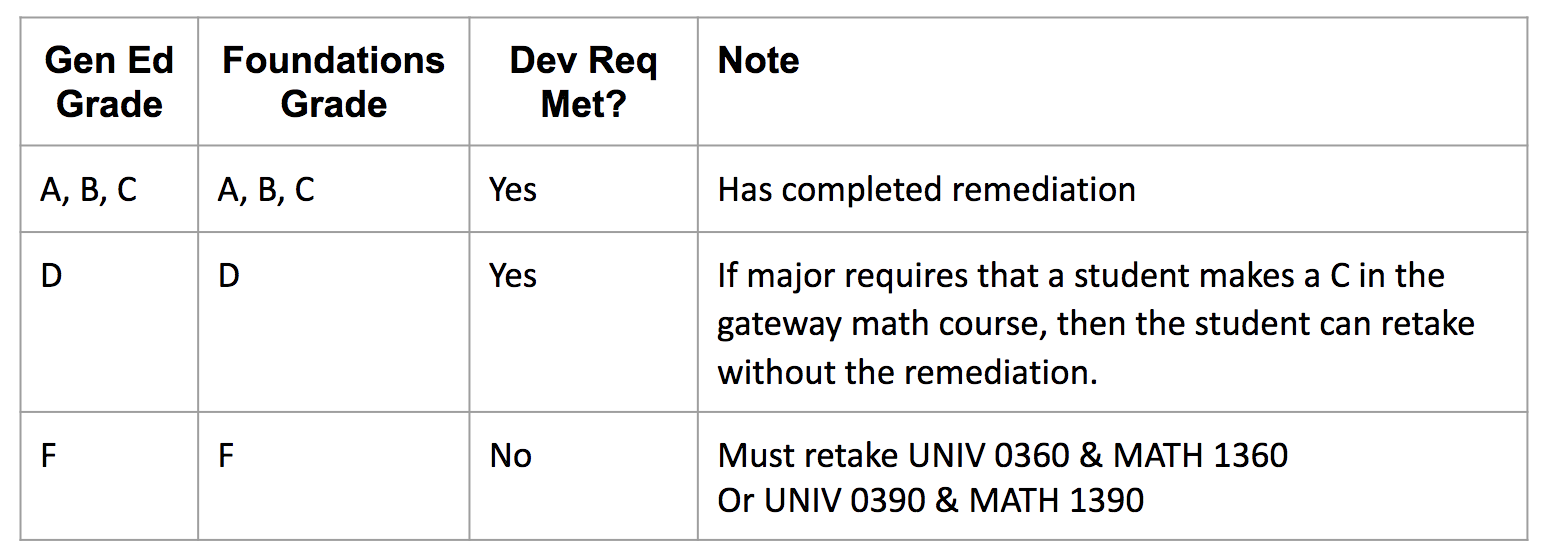
A table mapping Gen Ed Grade, Foundations Grade, developmental requirements completion status (Dev Req Met?), and explanatory notes for academic course progression.


Results

College Algebra Pass Rates

Last Updated:  April 2019
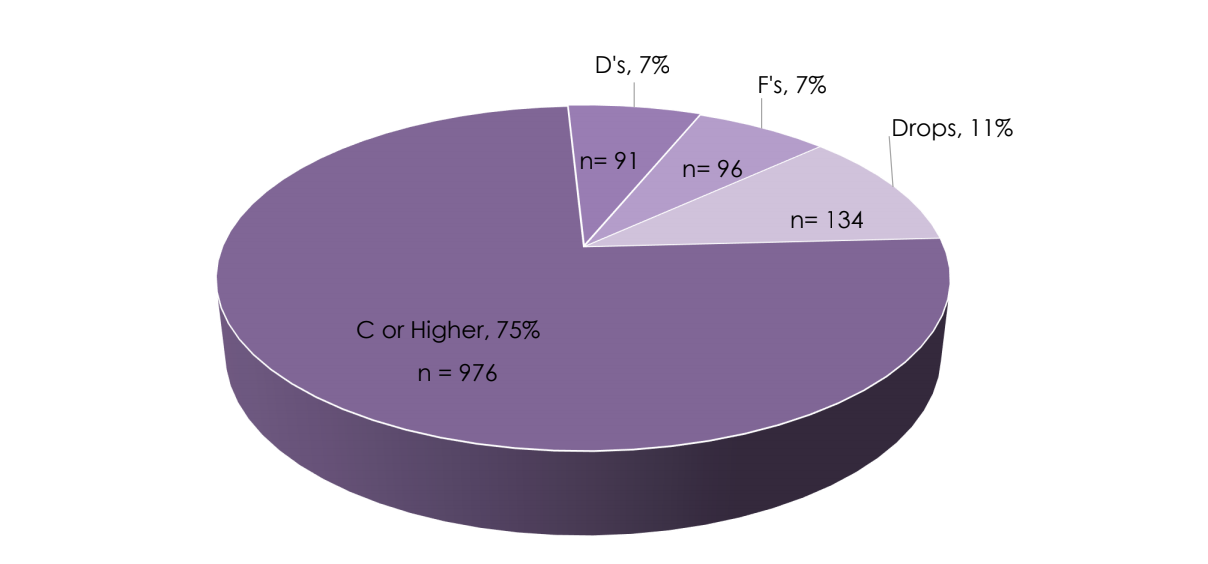
A 3D pie chart showing student grade distribution: C or Higher (75%, n = 976), Drops (11%, n = 134), F's (7%, n = 96), and D's (7%, n = 91).

College Algebra One Year Completion Rates by Math ACT

Before (Standalone) and After Corequisite Implementation

Last Updated:  April 2019

A bar chart comparing success rates between Standalone and Corequisite courses across Math ACT Scores (15 through 19+, Unknown, and OVERALL), showing higher success percentages for Corequisite courses in every score bracket.


Additional Resources

Webinar 1:  Corequisite for Beginners
Webinar 2:  A More in Depth Look at Corequisite Courses
Webinar 3:  Assessment and Mindset Courses

Department of Student Transitions Math Contacts:

Dr. Keith Pachlhofer, Ed.D
Ms. Leslie Gomes, M.A.