
Research Funding Previous Winners
Advancement of Undergraduate Research in the Sciences (AURS) & AURS STEM Communicator Award
2025 Recipients
AURS Fellowship $5000 Stipend
Emma Brown – Investigating the Changes in Compaction of PEP-19 by Neurodegenerative Oligomers
AURS STEM Communicator Award
1st Place $500 – Becca Chamoun – “Assessing Thermal Tolerance of Fishes in the Cossatot River, with a Focus on the Endemic Rocky Shiner
2nd Place $250 -Niya (Honey) Norfolk – AI Can’t Write Like That!’: A Test of Peoples’s Ability to Differentiate between AI and Human-generated Text
3rd Place $ 150 – Emma Brown – Investigating the Changes in Compaction of PEP-19 by Neurodegenerative Oligomers
2024 Recipients
AURS Fellowship $6000 Stipend
Ayema Mukhtar- “Exploring the Role of Weight Information in Object Recognition using Active Echolocation”
AURS STEM Communicator Award
1st Place- Joseph Sharp- “Rescuing Lifespan in C. elegans Modeled Huntington’s Disease via Vitamin D Supplementation”
2nd Place- Cassidy Jones- “Photochemical Amino Acid Radical Generation”
2023 Recipients
1st Place $500 – Hypatia Meraviglia – “Gas phase reactions of meteoric Mg+ and Al+ with organic nitriles occurring in the atmosphere of Titan”
2nd Place $250 – Emily Walsh – “Water Quality Indicators in Central Arkansas Streams”
3rd Place $125 – Thomas Crook – “Microbiota of naturally Acquired Cactophilic Drosophila Species”
2022 Recipients
Student Stipends: $6,000
Jamie Chen for the proposal entitled “N,N’ – squaramide synthesis to economically combat human African trypanosomiasis” with Dr. Gregory Naumiec in the Chemistry and Biochemistry Department.
Haley Cox for the proposal entitle “Synthesizing Bim-Py” with Dr. Marsha Massey n the Chemistry and Biochemistry Department
2021 Recipients
Student Stipends: $5,000
Thomas Crook for the proposal entitled “Microbiome Analysis of Cactophilic Drosophila arizonae Subspecies” with Dr. Tamara Haselkorn in the Biology Department.
Cameron Earles for the proposal entitled “Ligand Design for Sustainable Nickel Catalysis” with Dr. Kerry Barnett in the Chemistry and Biochemistry Department.
Weilun Tay for the proposal entitled “Estimating carbon emission induced by land cover and land use change in Arkansas” with Dr. Yaqian He in the Geography Department.
2020 Recipients
Summer Research Stipends: ($5000)
Manling Cheng for the proposal entitled “Comparison of normal rat leg bone with those under simulated microgravity and cosmic radiations conditions,” with Dr. Rahul Mehta in the Physics & Astronomy Department.
Grace Davenport for the proposal entitled “Effects of Riparian Buffer Width and Farm Pond Proximity on Fish Assemblages in the Black River Watershed in Arkansas,” with Dr. Ginny Adams in the Biology Department.
Southwestern Energy Research Fellowship
2025 Recipients
Michael Calvert: Graduate, Biology
Becca Chamoun: Undergraduate, Environmental Science
David Nicols: Graduate, Biology
Abbey Steely: Graduate, Biology
Group: David Adams, Graduate; Ryan Carter,Undergraduate; Maleah Cook, Undergraduate; Calvin Burdess, Undergraduate – all Environmental Science
2024 Recipients
Claire Binfield: Graduate, Biology
Jackson Holsted: Graduate, Biology
Alyssa Nolan: Undergraduate, Biology
Jaclyn Reifeiss, Graduate, Biology
David Adams: Undergraduate, Environmental Science
2023 Recipients
Donovan Clark, Graduate, Biology
Peyton Manry, Undergraduate, Environmental Science
Emiley Purvis, Graduate, Biology
Connor Tolly, Graduate, Biology
Krista Yari, Undergraduate, Environmental Science
2022 Recipients
David Adams, Undergraduate, Environmental Science
Michael Deutsch, Graduate, Biology
Ryne Lehman, Graduate, Biology
Jackson Pav, Graduate, Biology
Jessica Rath, Graduate, Biology
Cade Richesin, Undergraduate, Biology
Tanner Senti, Graduate Biology
2021 Recipients
Michael Deutsch, Graduate, Biology
Kira Gibbs, Graduate, Biology
Sam Little, Graduate, Biology
Robert Remy, Undergraduate, Biology
2020 Recipients
Manling Cheng, Undergraduate Student, Physics & Astronomy
Grace Davenport, Undergraduate Student, Biology
Chance Garrett, Graduate Student, Biology
Willow Newman, Undergraduate Student, Biology
Joseph Redinger, Graduate Student, Biology
2019 Recipient
Lillian McDaniel, Undergraduate Student, Geography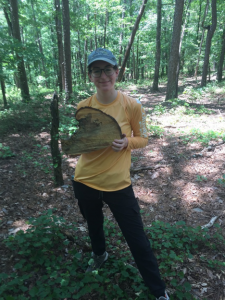
Shortleaf pine ecosystems are a dominant forest type in the Ouachita Mountains, but they have been severely degraded in the past century due to logging and fire suppression. Prior to the 1930s, regular, low-severity fire maintained open woodland characteristics allowing for a rich diversity of plants and animals. I collected data from one of the few old-growth shortleaf pine forests in Arkansas that developed under frequent burning prior to fire suppression. Tree ring data from the site provides information on forest composition, tree establishment, and growth rates during periods of frequent fire and during the last 70 years with no fire. This project will answer two questions: (1) Did the composition and timing of tree establishment change in response to changes in the fire regime? (2) Do tree-ring growth patterns indicate changes in forest density in response to shifting fire regimes? The results will be used to develop a comprehensive record of forest stand dynamics in the Ouachita Mountains and guide restoration of shortleaf pine forests. I will present this project at the American Association of Geographers Annual Meeting in Denver, Colorado, April 2020.
2018 Recipient
Mason Rostollan, Graduate Student, Biology 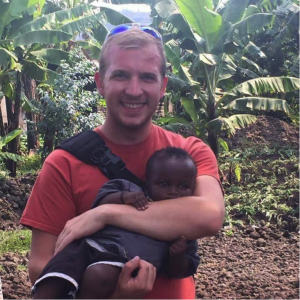
Kanembwe, Rwanda, is a small village in the northwest corner of the country and is characterized by poverty, unemployment, illiteracy, and overall low quality of life. The majority of residents perform day labor, so many families have food and healthcare insecurities. The purpose of this study is to characterize some of the environmental health risks identified through interviews with residents of the village. The two primary areas of concern are upper respiratory illness resulting from long-term smoke exposure and diarrheal diseases. The objectives of this study are to 1) characterize the microbial community structure of drinking water using 16S rRNA gene sequencing and 2) characterize smoke particles from various biomass-burning cooking methods. The primary result of this project will be a better understanding of causes of illness from the residents’ environment and the implementation of changes to lower the effects of these health risks. This project has been selected to be presented at the Mixed Methods International Research Association (MMIRA) in Vienna, Austria, in August 2018.
2017 Recipient
Chris Robinson, Graduate Student, Biology 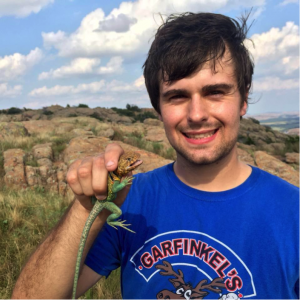
As the Earth’s climate continues to change, animal populations will either adapt to these new conditions or die off. It is difficult to predict how a species will respond to increasing temperatures, so it is important for conservation efforts to begin measuring and understanding how local populations interact with their environments. For reptiles and amphibians, temperature can influence development, behavior, and internal processes, so we might expect these to change as the climate is altered. For the Arkansas-native prairie lizard, hormones are critical for developing colorful signals males use to attract females. Such hormones are frequently influenced by environmental conditions. Currently, I am collecting data to understand how hormone concentrations and these colorful signals influence male reproductive success. These data will provide a baseline to which future data can be compared to assess how this populations of lizards has changed over time. Studies of common species, such as this one, are important as proxies to inform management strategies for other more critically threatened similar species.